Defense Innovation

Cara Abercrombie (MPA ‘03)
U.S.-China Relationship
As the former Principal Director for East Asia Policy at the Department of Defense, Cara Abercrombie has played a critical role in shaping U.S. defense strategy in one of the world’s most geopolitically sensitive regions. Her responsibilities have included advising the National Security Council and coordinating intelligence briefings, making her an essential figure in defining U.S. national defense and foreign policy. A key focus of her work is fostering a deeper understanding of how the U.S. and China’s respective military systems operate, recognizing that China does not delegate decision-making in the same way the U.S. does. This fundamental difference has been crucial in shaping the U.S.'s strategic approach toward China.
Abercrombie’s approach includes annual meetings with government and military officials of the People’s Republic of China, where both nations present a list of incidents in which the other’s military actions were perceived as unprofessional. The aim of these meetings is to establish norms that ensure both countries operate safely and professionally. These discussions allow the U.S. and China to align expectations and create a shared framework for managing their complex regional tensions. Abercrombie’s role is not just to advise on defense priorities but to ensure that the U.S. can adapt to China’s rising influence in East Asia while maintaining strong defense strategies. By combining diplomacy, collaboration, and innovation in defense, her work helps the U.S. remain a global leader in military strength and technological advancement.
Defense Acquisition
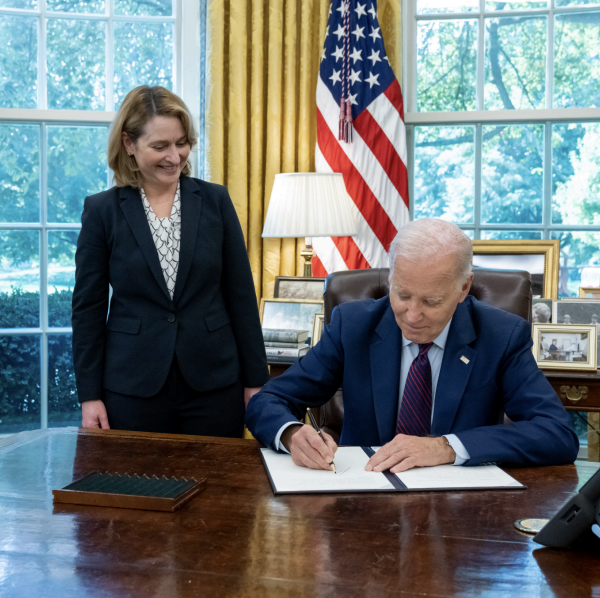
As Assistant Secretary of Defense for Acquisition during the Biden administration, Abercrombie highlighted the Department of Defense’s growing partnership with startups. As the defense sector increasingly prioritizes innovation, the Department recognizes the value of collaborating with emerging companies that are at the forefront of technological breakthroughs. Abercrombie’s focus on adapting acquisition strategies to integrate technologies from the commercial sector—particularly those developed by startups—has marked a shi in how the Department engages with innovation. She oversaw the acquisition of cutting-edge technologies, ranging from cybersecurity solutions to autonomous systems.
In our conversation, Abercrombie spoke about a major transition observed under the Obama administration. The U.S. government had historically led defense-related research and development, with innovations later adopted by the commercial sector. However, with the rise of Silicon Valley and the startup ecosystem, this trend reversed. Today, the commercial sector is driving innovation at an unprecedented pace, creating a highly competitive environment. As venture capital and private-sector advancements increasingly shape technologies with military applications, the Department of Defense must adapt its approach to acquiring and integrating these technologies.
Entrepreneurs in the Defense Landscape
As the Department of Defense increasingly relies on external innovation, it has had to streamline its processes, moving away from the lengthy and bureaucratic systems that once defined government contracts. Abercrombie emphasized the importance of building in-house capabilities, particularly through in-house startups that invest in and engage directly with the commercial sector. These in-house startups are given special authorizations that allow for faster contracting and greater flexibility in acquiring new technologies. As a result, the Department is no longer operating at a glacial pace when it comes to technology acquisition.
For tech entrepreneurs looking to engage with the defense sector, this is promising news—startups can now collaborate with the Department of Defense more efficiently, without the frustration of waiting months or even years for long-term contract approvals.
Gabriella Gregory (ECO ‘27)