Dorm Room to the NFL
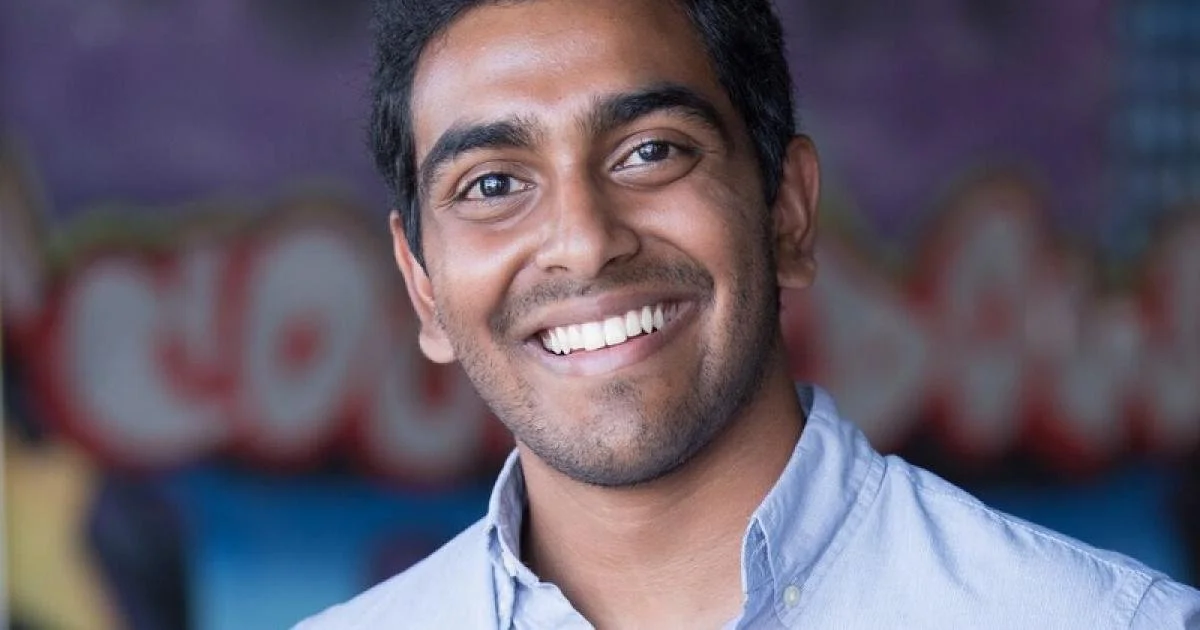
Vaidhy Murti (COS ‘15)
Friendsy at Princeton
I (Armita) recently had the pleasure of speaking with Vaidhy Murti, the CEO and founder of WIT Sports, the #1 digital activation platform in North America. During our conversation, his entrepreneurial journey to success truly resonated with me.
As a freshman at Princeton, Vaidhy (alumni COS ‘15) noticed how social connections became harder to make a er the first few weeks. Determined to solve this, he created Friendsy, a college-exclusive social network/dating app designed to facilitate blind matches among students. In an era when such apps were largely only used by older generations, Friendsy was revolutionary. Working out of his dorm, Vaidhy learned to build a website and, with the help of the Keller Center eLab Summer Accelerator, launched Friendsy. Over the next five years, Friendsy gained 300,000 users and facilitated 3 million matches, including several marriages. However, despite initial success, Vaidhy eventually realized that Friendsy couldn’t compete with the rise of Tinder, launched in 2014, which dominated the market with massive backing from Match Group.
Though Friendsy didn’t result in long-term success, Vaidhy viewed it as a learning experience that taught him invaluable lessons about building products, finding product-market fit, and, most importantly, the importance of a strong, dedicated team.
A Breakthrough at Last
Despite facing numerous setbacks, Vaidhy eventually found success with WIT Sports. However, this success was far from instant—it was the result of countless failures and pivots. In 2018, before TikTok became a major force in the U.S., Vaidhy had an idea for a short looping video app. WIT initially started as a video contest platform where users could submit funny videos, fans would vote on their favorites, and winners would earn money. But Vaidhy quickly realized that people were only coming to the app to win money, and if they didn’t win, they wouldn’t return. Recognizing the need for long-term engagement, he shied the model to connect brands with creators to generate branded video content. While this pivot showed promise, it had its own flaws—since WIT didn’t control the videos, they couldn’t guarantee customer satisfaction. After another failed attempt, Vaidhy struggled to keep WIT afloat, using his earnings from another job to fund the company.
One insight Vaidhy shared that really stood out to me was the difficulty of knowing when to stop. He explained that loved ones often encourage you to keep going, but sometimes pushing forward without the right outcome can be just as harmful. Ultimately, Vaidhy realized that he couldn’t continue down that path and needed to rethink his approach. Then, during the COVID-19 pandemic, he pivoted WIT into a platform that allowed sports teams to create fan-generated video content, as fans were no longer able to attend games in person. This new direction led to a major breakthrough—a deal with the NFL for their draft. From there, WIT quickly expanded by building more digital games to help teams engage their fans, propelling the business to new heights
Non-linear Roller Coaster
I was deeply inspired by Vaidhy’s ability to recognize when a business model wasn’t working and pivot to a new idea. His advice to aspiring entrepreneurs is simple but powerful: entrepreneurship is a “non-linear roller coaster” that can end in success, or not. For Vaidhy, it wasn’t a quick rise to the top. It took years of trying, failing, and learning from each setback before he finally achieved the success he had always dreamed of. The key to his perseverance was his willingness to pivot, adjust his strategy, and take feedback from the market to inform his next steps. Despite the media's portrayal of overnight success stories, Vaidhy’s journey shows that true entrepreneurial success is built over time, often through many failures, before the breakthrough happens.
Armita Kazemi (COS ‘28)